
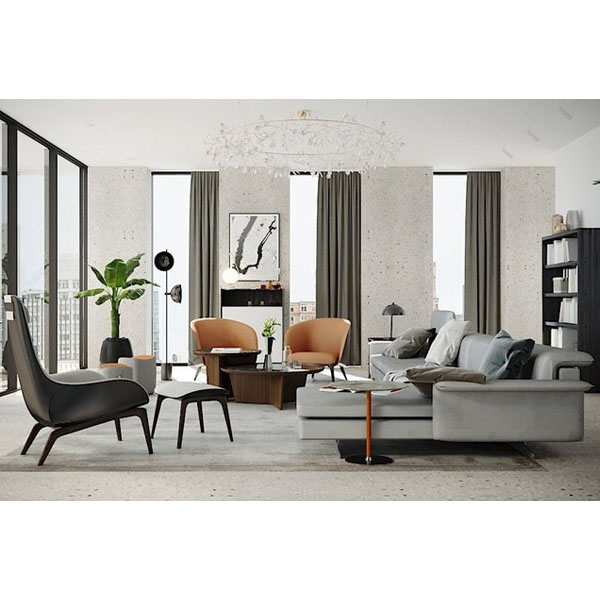
Choosing furniture for a North American apartment requires adapting to the apartment’s space while also addressing local logistics, policies, and usage scenarios. Here are some pitfalls to avoid in key areas such as size matching, material selection, and procurement:
Size and Space Matching Pitfalls:
Blindly Pursuing Large Furniture: Many people believe American furniture must be “large and heavy,” forcing sofas over 3 meters long into living rooms with a width of less than 4 meters, resulting in narrow passageways and awkward sideways movement. The correct approach is to keep the sofa length to 60%-70% of the living room’s width.
Breakthrough Bed Selection: In bedrooms around 12 square meters, a 1.8-meter bed can be too cramped, leaving no space for bedside tables. A 1.5-meter bed is more suitable for these smaller apartments.
Ignoring Entry and Moving Dimensions: Before purchasing large furniture items like sofas and cabinets, failing to measure the apartment door width, stairwell corners, and elevator dimensions often leads to situations where furniture delivered downstairs cannot be moved inside. It’s recommended to simulate the furniture’s outline on the ground beforehand using cardboard boxes or tape, and confirm the furniture’s disassembly feasibility to avoid rework or returns later.
Small furniture proportions can be problematic: For example, a coffee table that doesn’t match the sofa’s size will result in insufficient space, making it difficult to reach items; a bedside table wider than one-third the bed’s width will make the space feel cramped and look disproportionate. A bedside table 50-60cm wide is usually a good match for a 1.8-meter bed.
Materials and craftsmanship issues can also be problematic: Many furniture pieces on the market use thin wood veneer to imitate solid wood. If the veneer is less than 0.2mm thick, it’s prone to blistering and peeling after about a year. Even if labeled as solid wood, without proper drying, it’s prone to cracking and warping due to varying humidity levels in North America. Additionally, if the spacing between the bed frame slats exceeds 5cm, the mattress will sag and warp; choose solid wood slats for greater durability.
Inferior Surface Treatment and Filling Materials: Some furniture uses poor-quality water-based paint, which peels easily from minor bumps and may whiten and crack after prolonged sun exposure. High-quality water-based paint requires a “three-coat base, two-coat top, and 72-hour drying process.” For upholstered furniture like sofas, if the foam filling is low-density, it will easily sag after prolonged sitting; the fabric is not stain-resistant and cannot be washed, making cleaning very difficult for families with children or pets.
Decorative Design Neglecting Practicality: The carvings and decorations commonly found on American furniture, if overly ornate, can easily accumulate dust in deep grooves, making cleaning difficult, and sharp carvings may also injure children. Furthermore, small parts such as plastic handles and inferior metal fittings not only lower the furniture’s quality but are also easily damaged, making replacement troublesome.
Purchase and Transaction Cost Pitfalls
Ignoring Hidden Costs: Focusing only on the furniture’s listed price while neglecting hidden costs such as delivery and installation fees. North American furniture delivery is tiered, with significant differences in cost between door-to-door delivery, interior delivery, and on-site installation. Some retailers’ “free delivery” only applies to specific zip codes or only to the door, with additional charges for delivery upstairs. Furthermore, cross-border furniture purchases may face high tariffs, and wooden furniture must comply with USDA/APHIS quarantine rules; violations may result in confiscation.
Misunderstandings about Returns and After-Sales Terms: Due to high shipping costs, many large furniture items may only be offered with a merchant credit limit instead of a cash refund, and some custom-made furniture may even be marked as non-refundable. If the goods are not inspected before signing for delivery, it will be difficult to seek redress later if scratches, missing parts, or other problems are discovered. Additionally, some merchants’ extended warranty services have vague coverage, and you may find yourself unable to claim compensation for malfunctions after paying.
Style and Usage Scenarios Pitfalls
Cluttered Styles and Conflicting Atmosphere: Blindly piling on American elements, such as mixing vintage carved furniture with shiny metal furniture, and adding brightly colored decorations, will create a chaotic space theme. North American apartments are better suited to classic furniture with clean lines, paired with low-saturation earth tones, which are both aesthetically pleasing and easily adaptable to different soft furnishings.
Ignoring the need to adapt to lifestyle habits: For example, families with children may choose expensive genuine leather sofas, which are easily scratched and damaged; bedside tables with complex electronic functions are not only expensive but also inconvenient to repair later, and their practicality is not as good as simple drawer models. In addition, if the dining chairs have cushions that are too soft or too hard, sitting for a long time will be extremely uncomfortable; cotton or linen or imitation leather materials with moderate sponge filling are better choices.
