
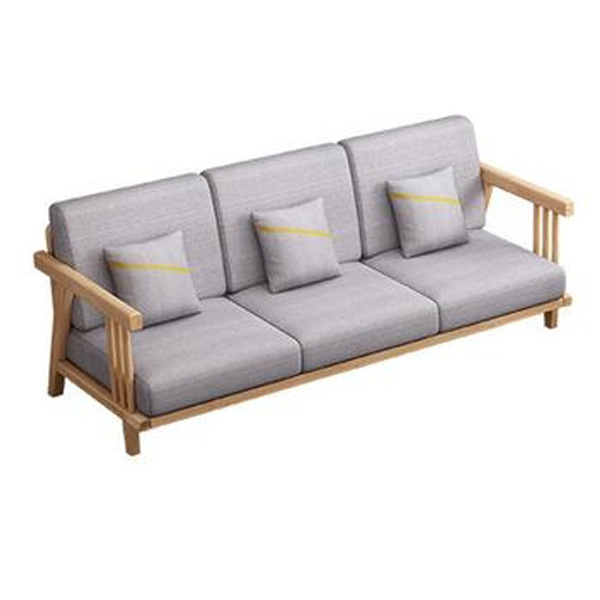
Compressed foam sofas are becoming increasingly common in both domestic and international markets. Does this mean that framed sofas, which were previously popular, are no longer favored by consumers? Let’s analyze the advantages and disadvantages of framed sofas and pure foam sofas, as follows:
A:Incompressible wooden frame fabric sofa
Advantages: 1. Comfortable and Breathable Seating: The soft fabric, combined with the stable support of the wooden frame, ensures a solid seating experience while preventing stuffiness from prolonged sitting thanks to the fabric’s breathability. Some cotton and linen fabrics even wick away moisture, making them suitable for all seasons.
2. Versatile Styles: A wide variety of fabric colors and textures are available, from simple solid colors to vintage patterns. Paired with different wooden frames, they can complement fresh styles like country and Scandinavian, as well as retro and eclectic home environments, offering high decorative flexibility.
3. Flexible Cleaning and Refreshing: Most sofa covers are removable and washable. They can be easily removed and cleaned after daily cleaning, and multiple sets can be custom-made for rotation. This solves stain problems and allows for cost-effective changes to the home’s ambiance without replacing the entire sofa.
- Balanced between cost-effectiveness and safety: Compared to wooden-framed leather sofas, it is generally cheaper and offers better value for money; at the same time, the fabric has no sharp edges and no leather odor, and if the wooden frame is made of high-quality solid wood, its environmental friendliness is also guaranteed, making it more friendly to the elderly and children.
Disadvantages: 1. Prone to dirt and difficult to maintain: Light-colored fabrics easily attract dust and stains, while special fabrics like velvet easily attract hair. After washing, they may fade, wrinkle, or shrink. Frequent washing also consumes a lot of time and effort.
2. Durability greatly affected by materials: Inferior fabrics are prone to wear and pilling with long-term use. Even if the fabric is durable, the seat cushion foam, under the support of the wooden frame, may lose elasticity and collapse under long-term pressure, affecting the user experience.
- Poor environmental adaptability: Fabrics are prone to mold in humid areas and easily attract dust due to static electricity in dry areas. The wooden frame may shrink and crack in alternating wet and dry environments, indirectly affecting the overall structural stability of the sofa.
B: Incompressible wooden frame leather sofa
Advantages: 1. High-end feel and sophisticated look: Genuine leather boasts a delicate sheen and warm touch, paired with the substantial feel of a solid wood frame, creating a grand and elegant overall design. Whether it’s a large, luxurious model or a compact, casual one, it exudes sophistication and luxury, perfect for families who appreciate quality.
2. Easy to clean and durable: Everyday stains can be easily wiped clean with a damp cloth, saving the hassle of disassembly and washing compared to fabric sofas. High-quality genuine leather is highly wear-resistant, and with a sturdy wooden frame, it can last for over a decade with proper maintenance, far exceeding the lifespan of ordinary fabric sofas.
3.Comfortable and supportive seating: Genuine leather is soft to the touch and breathable, providing a comfortable experience in both winter and summer. The wooden frame offers stable support, preventing sagging and satisfying relaxation needs while preventing back pain from prolonged sitting.
Disadvantages: 1. High Cost: High-quality genuine leather is scarce, and the wooden frames are often made of matching hardwoods, making these sofas significantly more expensive than fabric sofas. Furthermore, regular maintenance with specialized leather conditioner is required, and repairs for scratches or cracks are very costly.
2. Stringent Maintenance Requirements: Genuine leather is susceptible to scratches from sharp objects; prolonged exposure to direct sunlight can cause aging, fading, and cracking; and it can mold in humid environments. These conditions must be avoided, and the maintenance process is complex.
3.Limited Style and Usage: The style tends to be sophisticated and luxurious, making it difficult to match with minimalist or fresh home styles like Scandinavian or country styles. Genuine leather also has a certain odor, requiring new sofas to air out for a period of time to dissipate the smell, and some people may be allergic to the material.
C: Frameless and compressible foam sofa
Advantages: 1. Effortless Handling: Vacuum compression significantly reduces volume, lowering logistics costs and allowing easy passage through narrow hallways and elevators. A single person can easily place it after unpacking, solving the problem of traditional sofas being difficult to move into homes and catering to the frequent moving needs of renters.
2. Soft and Supportive Comfort: Pure sponge material conforms to the body’s curves, providing a comfortable and supportive feel when sitting, relieving pressure. It’s especially suitable for relaxing, watching TV, or taking a nap. Some high-resilience sponge models quickly return to their original shape, preventing dents from prolonged sitting.
3. Safe and Flexible Use: Without a rigid wooden frame or sharp connectors, there’s no need to worry about bumps and injuries during play or activities, making it suitable for families with children and pets. It also has no fixed structural limitations, allowing it to be placed freely in living rooms, bedrooms, balconies, etc. Some models can even be folded up and used as a temporary bed.
- Environmentally Friendly and Reduced Resource Consumption: No need to cut down trees to build the frame; some products are made with recycled sponge, reducing reliance on forest resources. Furthermore, the production process eliminates the need for the large amounts of glue required for assembling wooden frames, reducing the release of formaldehyde and other chemical pollutants.
Disadvantages: 1. Durability depends on sponge quality: Low-density sponge sofas are prone to sagging and deformation over time, resulting in a shorter lifespan; while high-density sponge sofas are durable, they tend to be firmer, failing to meet the needs of those who prefer a softer feel. Furthermore, regardless of the type of sponge, prolonged localized pressure can cause irreversible indentations.
2. Cleaning and odor issues are prominent: Sofas are mostly constructed with a single piece of sponge, with no removable cover. Surface stains can only be wiped on-site, making thorough cleaning difficult. New sofas may emit an odor that requires prolonged ventilation to dissipate; the odor from some inferior sponges is even difficult to eliminate completely.
3. Price and style limitations: Compression processing and high-quality sponges require advanced production technology, resulting in higher prices than ordinary sponge sofas. Moreover, to accommodate compression processing, designs are often minimalist and legless, leading to a limited style and difficulty integrating into more sophisticated home decor styles such as Chinese or European styles.
- Potential issues with assembly and rebound: Some modular designs require self-assembly, which is not user-friendly for those with weak hands-on skills; if the compressed packaging is damaged during transportation, the sponge may rebound prematurely, affecting transportation and use; some low-priced products may also experience incomplete rebound and shape deformation after unpacking.
In conclusion, both framed sofas and pure foam compressible sofas have their advantages and disadvantages, and consumers can choose the product they prefer based on their own needs and actual circumstances.

